
Long beans, also known as yardlong beans or asparagus beans, are a highly nutritious and versatile vegetable. They are rich in vitamins A, C, K, protein, and fiber, making them excellent for digestion, immunity, and overall health.
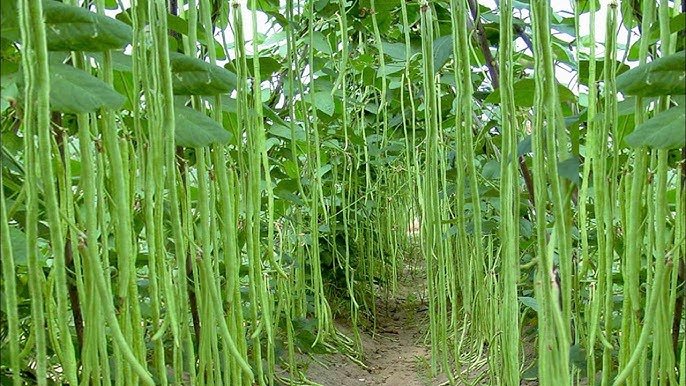
Despite their popularity, many people believe that growing long beans is difficult, especially at home or in small spaces. However, as highlighted in the YouTube video “People Laugh When They See Me Growing Long Beans… They Are Shocked When They See The Results”, producing abundant, long, and healthy beans is easier than most people think.
With the right techniques, support, and care, anyone can grow long beans that will astonish friends and family. This guide walks you through step-by-step methods to grow long beans at home, ensuring high yields and a bountiful harvest.
Why Grow Long Beans at Home?
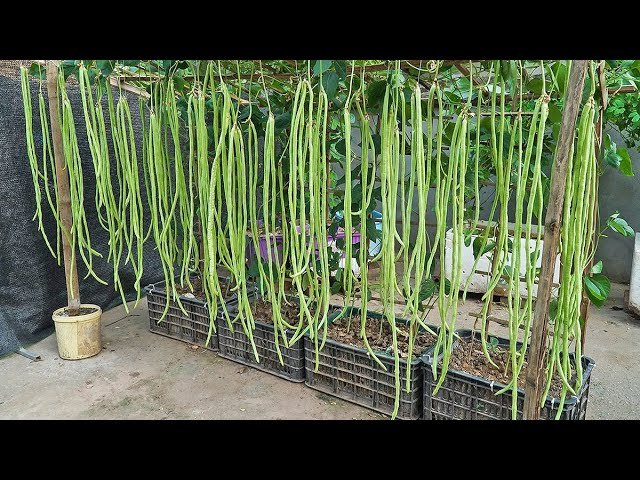
Growing long beans at home offers numerous advantages:
- Fresh and Nutritious: Homegrown beans are healthier and chemical-free.
- Space-Efficient: Suitable for terraces, balconies, and small gardens.
- High Yield: Proper care can produce an astonishing number of beans per plant.
- Easy to Grow: Minimal maintenance once the plant is established.
- Cost-Effective: Save money and enjoy continuous harvests without buying from the market.
The combination of health, yield, and ease makes long beans an ideal vegetable for home gardens.
Step 1: Selecting the Right Variety
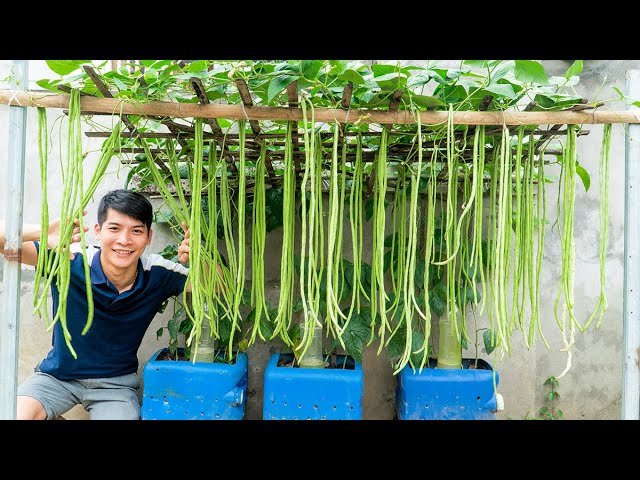
The first step is choosing a suitable variety:

- Yardlong Bean (Vigna unguiculata subsp. sesquipedalis): Classic variety with beans up to 3 feet long.
- Bush Long Bean: Compact variety for small containers or terraces.
- Hybrid Varieties: High-yielding, disease-resistant, and faster-growing.
Selecting a high-quality seed or sapling is critical for healthy growth and abundant production.
Step 2: Choosing Containers or Garden Beds
Long beans are climbing plants, so providing sufficient space and support is essential:
- Containers: Minimum 20–25 liters per plant.
- Grow Bags or Sacks: Ideal for terrace or balcony cultivation.
- Garden Beds: Raised beds with good drainage and 12–18 inches depth.
Ensure containers have drainage holes to prevent root rot and provide room for strong root development.
Step 3: Preparing Soil for Long Beans
Long beans thrive in loose, nutrient-rich, well-draining soil:
Recommended Soil Mix:
- 40% garden soil or composted soil
- 30% organic matter (cow dung, vermicompost)
- 20% cocopeat or peat moss for moisture retention
- 10% sand or perlite for drainage
Optional: Add bone meal or wood ash for calcium and trace nutrients to support flowering and pod growth.

Step 4: Sowing Seeds or Transplanting Seedlings
For Seeds:
- Soak seeds in lukewarm water for 8–12 hours to speed germination.
- Sow 2–3 seeds per container or hole, 1 inch deep.
- Keep soil consistently moist until germination (5–10 days).
For Seedlings:
- Transplant healthy seedlings into prepared containers or beds.
- Space plants at least 12–18 inches apart for proper airflow and sunlight.
- Water immediately to help roots establish.
Proper sowing ensures uniform growth and strong plants.
Step 5: Providing Support for Climbing
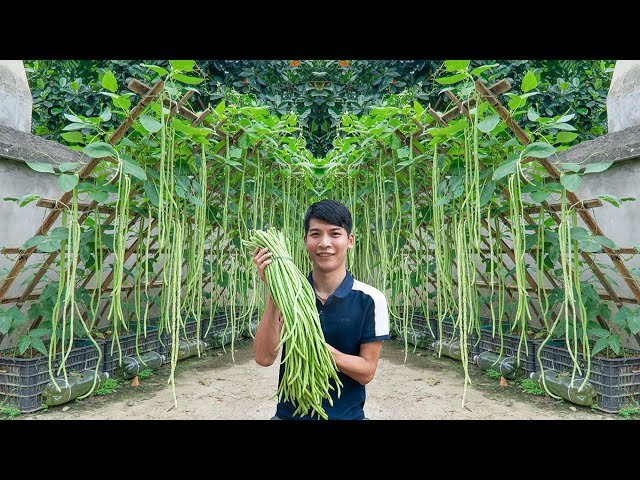
Long beans grow as vines, and vertical support is essential:
- Use trellises, bamboo sticks, netting, or strings.
- Train vines to wrap around supports gently as they grow.
- Vertical growth keeps beans off the ground, reducing pest and disease problems.
Proper support encourages more flowers, more beans, and longer pods.
Step 6: Watering and Moisture Management
Consistent watering is key for healthy vine growth and abundant beans:

- Water 2–3 times per week, depending on weather.
- Maintain soil evenly moist, avoiding waterlogging.
- Mulch with dry leaves or straw to retain moisture and regulate temperature.
Well-watered plants produce longer, tender, and more numerous pods.
Step 7: Fertilization for High Yields
Long beans are nutrient-demanding, especially during flowering and pod development:
- Apply organic fertilizers like vermicompost or cow dung slurry every 10–15 days.
- Side-dress with potash-rich materials such as banana peel powder to encourage flowering and pod formation.
- Avoid excess nitrogen, which promotes leaf growth but reduces pod yield.
Balanced fertilization ensures maximum fruiting and high-quality pods.
Step 8: Sunlight and Temperature Requirements
Long beans flourish in warm, sunny conditions:
- Provide 6–8 hours of direct sunlight daily.
- Ideal temperature: 20–30°C (68–86°F).
- Protect young plants from frost or extreme heat.
Adequate sunlight promotes vigorous growth, flowering, and long bean development.
Step 9: Pollination for Maximum Pods
Beans rely on pollination for pod formation:

- Bees and natural pollinators assist in pollen transfer.
- In areas with low pollinator activity, gently shake flowers or use a small brush to transfer pollen.
- Proper pollination increases fruit set and pod length.
Monitoring flowers ensures more beans per plant.
Step 10: Pest and Disease Management
Although hardy, long beans may encounter pests and diseases:
| Problem | Solution |
|---|---|
| Aphids | Spray neem oil or garlic-chili solution |
| Whiteflies | Use organic insecticidal soap or sticky traps |
| Fungal diseases | Ensure good spacing, airflow, and avoid wetting leaves |
| Root rot | Provide proper drainage and avoid overwatering |
Organic care helps maintain healthy plants and abundant harvests.
Step 11: Harvesting Long Beans
The most rewarding part is harvesting:
- Beans are usually ready 50–60 days after sowing, depending on the variety.
- Pick young, tender pods for best flavor.
- Regular harvesting encourages continuous pod production.
Homegrown long beans are crisp, fresh, and nutritious, perfect for stir-fries, salads, and curries.
Step 12: Tips for Continuous Abundant Harvest
- Succession Planting: Sow new seeds every 2–3 weeks for a constant supply.
- Pruning: Remove old or excess leaves to focus energy on pods.
- Soil Enrichment: Add compost or organic matter to maintain fertility.
- Companion Planting: Plant herbs like basil or flowers like marigold to repel pests naturally.
Following these tips guarantees stunning yields that surprise everyone.

Step 13: Why People Are Shocked by the Results
The abundance of long beans often astonishes friends and family because:
- Proper care produces extra-long and tender pods.
- Vertical growth maximizes space utilization.
- Healthy plants can produce several dozen pods per vine.
- The method is simple and inexpensive, yet highly productive.
With patience and attention, even beginners can achieve professional-level results.
Conclusion: Grow Long Beans Like a Pro
Growing long beans at home is easy, cost-effective, and surprisingly productive. With the right variety, support, nutrients, and care, anyone can grow healthy, long, and abundant beans that will amaze friends and family.
Whether you have a terrace, balcony, or small backyard, following these steps ensures a continuous supply of fresh, crisp, and nutritious long beans all season long. Start today and experience the joy of a high-yield home garden!

Leave A Comment