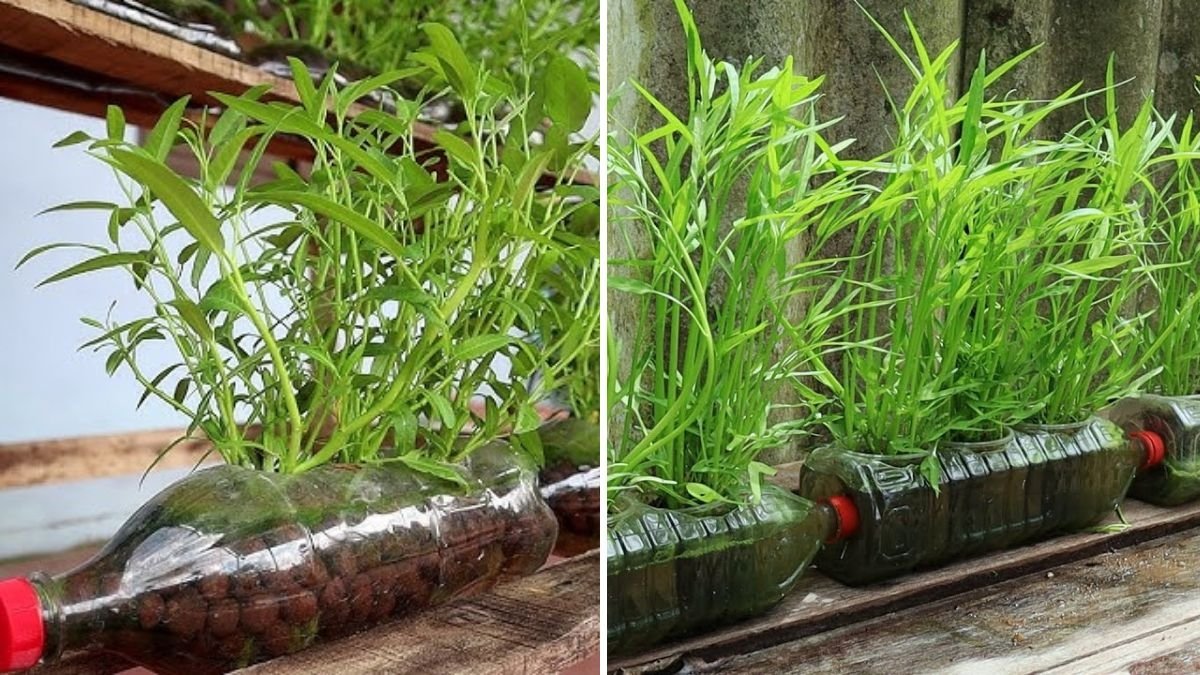
Have you ever imagined growing fresh, nutritious vegetables at home without soil? If so, you’re in for a treat! Using recycled plastic bottles, you can grow water spinach, also known as kangkung, in a hydroponic setup that’s easy, sustainable, and perfect for small spaces. This innovative method is not only eco-friendly but also a fun way to cultivate fresh greens year-round.
In this comprehensive guide, we’ll show you step-by-step how to grow water spinach in recycled plastic bottles without soil, including preparation, planting, maintenance, and harvesting. This method is beginner-friendly and ideal for urban gardeners who want fresh, healthy vegetables with minimal effort.
1. Why Grow Water Spinach at Home?
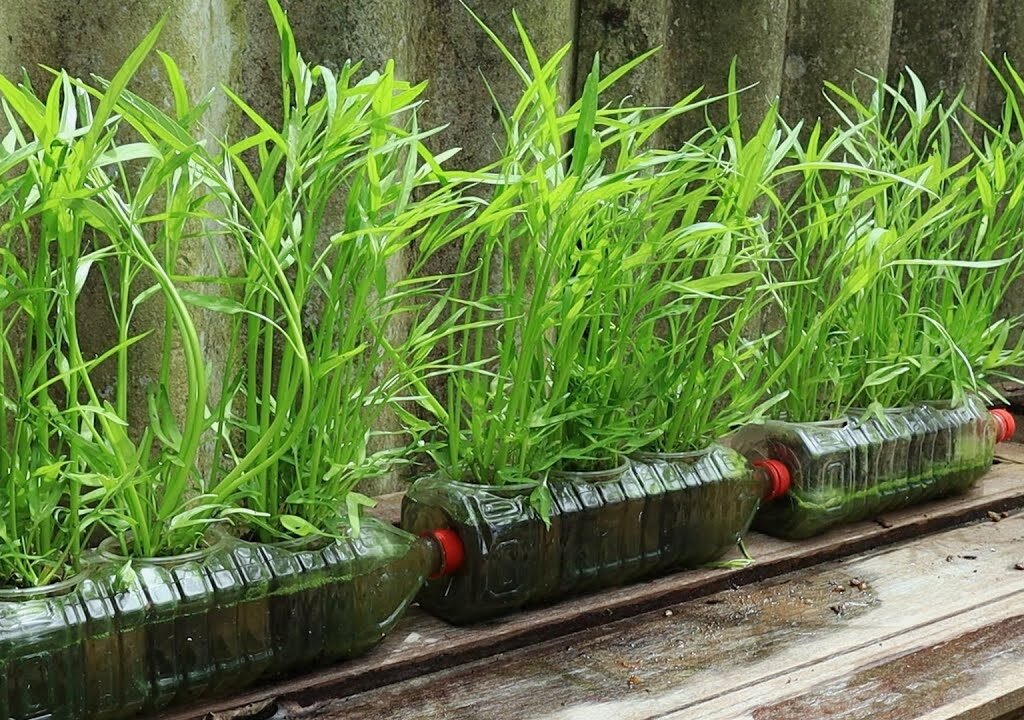
Water spinach (Ipomoea aquatica) is a popular leafy green vegetable in many Asian cuisines. It is nutritious, fast-growing, and highly versatile in the kitchen.
Nutritional benefits of water spinach:
- Rich in vitamins A and C, supporting immunity and vision
- Contains iron, calcium, and potassium, promoting bone and heart health
- High in fiber, aiding digestion
- Low in calories, making it ideal for healthy diets
Growing water spinach at home ensures fresh, chemical-free vegetables, reduces grocery bills, and supports a sustainable lifestyle.
2. Why Use Recycled Plastic Bottles?
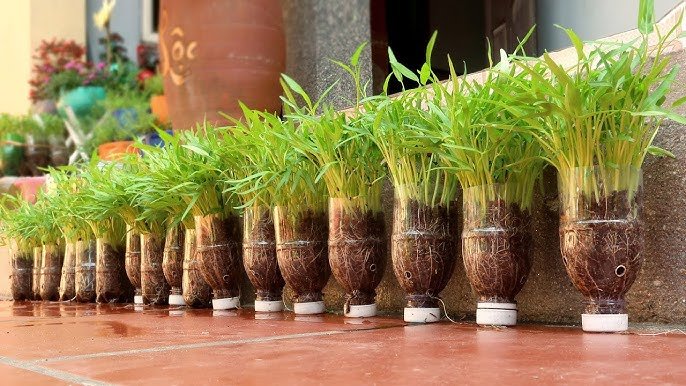
Recycling plastic bottles for vegetable growth offers multiple benefits:

- Eco-friendly: Reduces plastic waste by reusing bottles as planters.
- Space-saving: Ideal for terraces, balconies, and small indoor spaces.
- Water-efficient: Hydroponic setup minimizes water usage.
- Portable: Easy to move bottles to adjust sunlight exposure.
- Beginner-friendly: No soil is needed, making it simple for first-time gardeners.
Using bottles not only helps the environment but also allows you to grow fresh, healthy greens anywhere.
3. Materials Needed for Hydroponic Water Spinach
To start your bottle hydroponic garden, gather the following materials:
- Plastic bottles (1.5–2 liters)
- Water spinach cuttings (preferably with small roots or nodes)
- Water (tap water is sufficient, but let it sit for 24 hours to remove chlorine)
- Nutrient solution (optional for faster growth, can use liquid compost or hydroponic fertilizer)
- Scissors or craft knife
- String or wire (optional for hanging setup)
With these materials, you can grow fresh water spinach without soil, making it ideal for limited spaces.
4. Preparing Plastic Bottles for Hydroponic Gardening
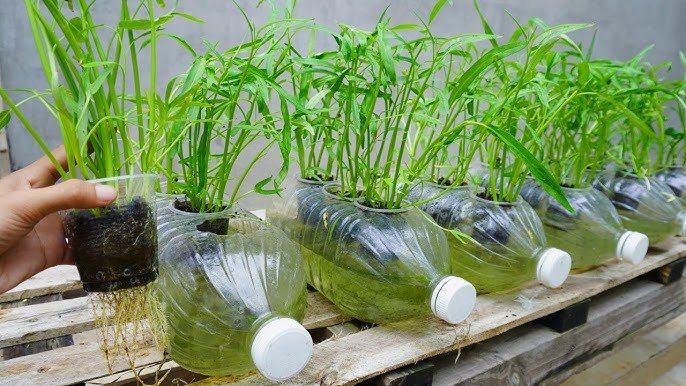
Transforming a plastic bottle into a hydroponic planter is simple:
- Clean the Bottles:
Wash thoroughly to remove any residues or labels. - Cut the Bottle:
Cut a rectangular opening on the side to insert plant cuttings. Leave the bottom intact to hold water. - Optional Hanging Setup:
Make holes near the top for string or wire to hang bottles vertically, saving terrace or balcony space. - Add Water:
Fill the bottle with clean water. If using a nutrient solution, mix according to instructions.
Your bottle is now ready to support water spinach growth without soil.
5. Selecting Water Spinach Cuttings
Water spinach is one of the easiest vegetables to propagate through cuttings. Here’s how to choose the best ones:

- Look for healthy stems with at least 3–4 nodes (small bumps where roots can develop).
- Avoid wilted, yellow, or damaged cuttings.
- Cuttings around 6–8 inches long are ideal for bottle hydroponics.
Healthy cuttings ensure fast growth and continuous harvests.
6. Planting Water Spinach in Plastic Bottles
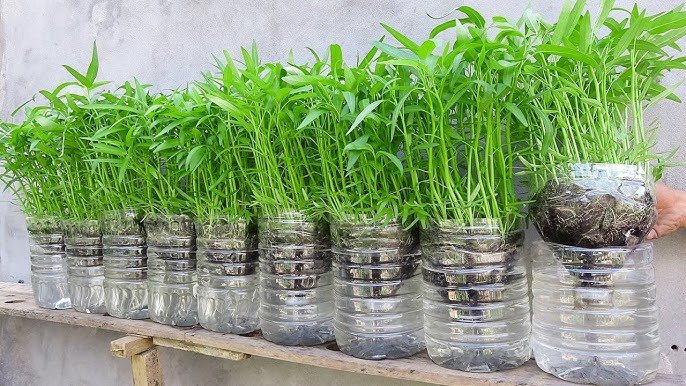
Planting water spinach in a hydroponic bottle is straightforward:
- Insert Cuttings:
Place the cuttings into the bottle’s opening, ensuring that nodes are submerged in water. - Positioning:
Place the bottle in a sunny location with 4–6 hours of sunlight daily. - Water Maintenance:
Change water every 3–4 days or top up with fresh water. If using a nutrient solution, replenish according to instructions. - Support Growth:
Ensure the cuttings are stable and not floating out of place. Use a small foam piece or mesh if necessary to hold them upright.
Within a week, you will notice roots starting to form at the submerged nodes.
7. Caring for Hydroponic Water Spinach
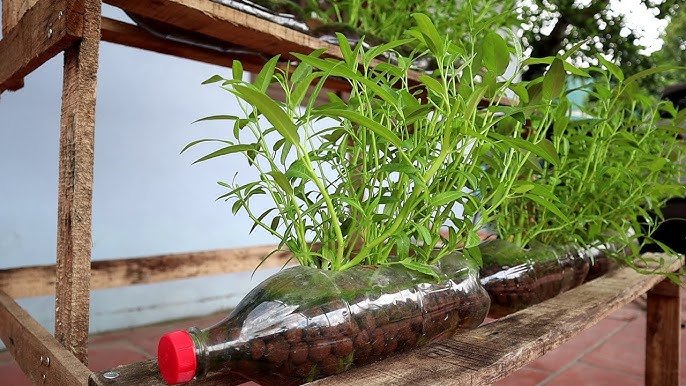
One of the great things about water spinach is that it requires minimal care:
- Watering: Keep the water level consistent. Bottles hold enough moisture for days, reducing frequent attention.
- Light: Adequate sunlight is crucial for leaf development. Adjust the bottle position if leaves lean toward light.
- Nutrients: Optional, but adding organic liquid fertilizer every 2 weeks can accelerate growth.
- Pruning: Harvest outer leaves regularly to encourage new growth and prevent overcrowding.
Even if you forget to water for a day or two, water spinach is resilient and continues to grow.
8. Harvesting Water Spinach
Water spinach grows rapidly, and you can begin harvesting within 2–3 weeks:

- Cut-and-come-again method: Snip outer stems and leaves 2–3 inches above the waterline. Leave inner stems to continue growing.
- Full harvest: If needed, cut the entire plant for cooking. New growth emerges from nodes for a second harvest.
- Continuous harvest: Start new cuttings every 1–2 weeks for a steady supply of fresh greens.
This method allows for frequent, fresh harvests without replanting each time.
9. Advantages of Growing Vegetables in Plastic Bottles Without Soil
Using recycled bottles for hydroponic gardening offers numerous benefits:
- ✅ Space-saving: Perfect for urban apartments and small terraces.
- ✅ Water-efficient: Uses less water than traditional soil gardening.
- ✅ Low-maintenance: Hardy plants like water spinach grow well with minimal care.
- ✅ Sustainable: Recycles plastic and promotes zero-waste gardening.
- ✅ Fresh and organic: Enjoy chemical-free, nutrient-rich greens year-round.
This approach is ideal for anyone looking to grow vegetables sustainably and conveniently.
10. Common Challenges and Solutions
Even though hydroponic water spinach is easy to grow, some issues may arise:
- Yellowing leaves: Caused by insufficient sunlight or lack of nutrients. Adjust position and add liquid fertilizer.
- Algae growth in water: Prevent by using opaque bottles or covering clear bottles with paper or cloth.
- Root rot: Change water regularly and avoid stagnant conditions.
- Pests: Minimal indoors, but watch for small insects. Neem oil or organic spray works if necessary.
Regular observation ensures your plants stay healthy and productive.
11. Maximizing Yield in Bottle Hydroponics
To get the best results:

- Grow multiple bottles for continuous harvest.
- Rotate bottles to ensure even sunlight exposure.
- Use succession planting, adding new cuttings every 1–2 weeks.
- Keep water clean and enriched with nutrients for faster growth.
- Hang bottles vertically to save space and improve airflow.
With these tips, a small balcony or terrace can produce enough water spinach for regular family meals.
12. Cooking Ideas for Homegrown Water Spinach
Water spinach is delicious and versatile in the kitchen:
- Stir-fried with garlic and chili: Quick and flavorful.
- Boiled or steamed: Retains nutrients and crispness.
- Soups and broths: Adds a healthy green boost.
- Salads: Lightly blanched leaves with a dash of sesame oil or dressing.
- Juices and smoothies: Blend fresh leaves for a nutrient-rich green drink.
Freshly harvested water spinach from your hydroponic bottles is more flavorful and nutritious than store-bought greens.
13. Why Hydroponic Bottle Gardening Works
Hydroponic gardening in plastic bottles works because:
- Water spinach is naturally aquatic and thrives in water without soil.
- Bottles retain water, creating an ideal environment for roots.
- Limited space encourages compact, manageable growth.
- Vertical or hanging setups maximize sunlight exposure.
Even beginners can grow vegetables successfully with minimal attention, making it perfect for urban living.
14. Benefits of Low-Maintenance Bottle Gardening
- Reduces time spent on daily watering and weeding
- Encourages eco-friendly practices by reusing plastic bottles
- Provides a continuous supply of fresh, healthy vegetables
- Perfect for small spaces like kitchen counters, terraces, or balconies
- Ideal for kids or beginner gardeners to learn about plant growth
Hydroponic bottle gardening transforms even limited spaces into productive, sustainable vegetable gardens.

Conclusion
Growing water spinach in recycled plastic bottles without soil is easy, fun, and sustainable. Even with minimal care, you can enjoy fresh, nutrient-rich vegetables year-round. Using this method, you can create a low-maintenance, space-efficient, and eco-friendly garden on your balcony, terrace, or kitchen counter.
Start your hydroponic bottle garden today and enjoy the benefits of fresh, homegrown water spinach—without soil, without constant care, and with minimal effort. This approach not only provides healthy greens but also supports a sustainable, environmentally-friendly lifestyle.

Leave A Comment