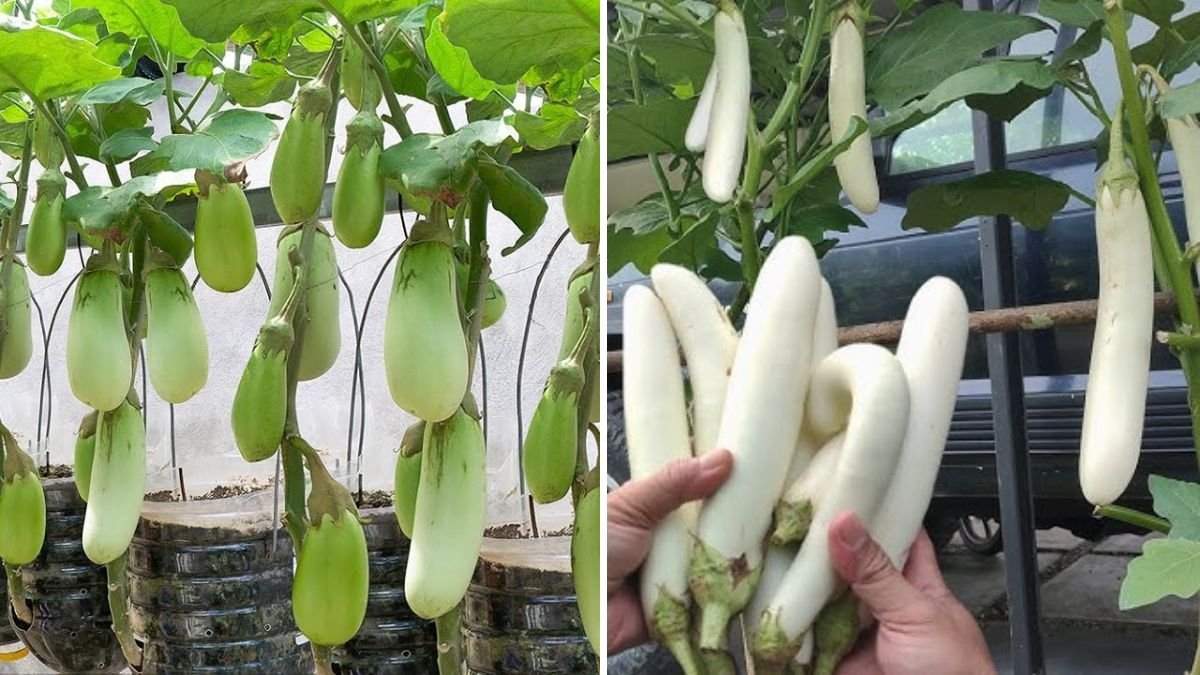
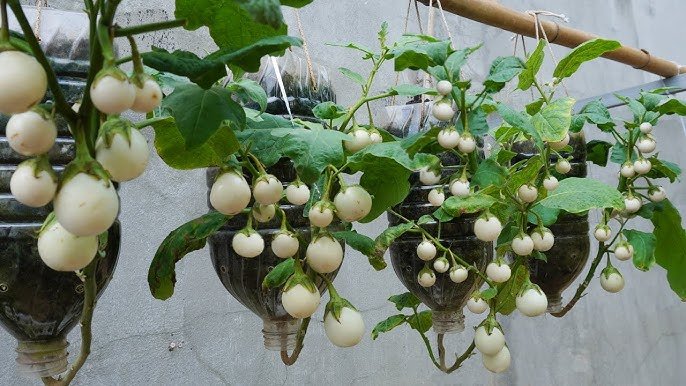
White eggplant, also known as white aubergine, is a unique and versatile vegetable with a mild, slightly sweet flavor. Its striking white skin makes it a standout in salads, curries, roasted dishes, and even grilled recipes. While many people rely on markets for fresh white eggplants, you can grow them at home in plastic bottles, producing multiple harvests from a small space.
This method is perfect for urban gardeners, apartment dwellers, or anyone with limited space but a desire for fresh, homegrown white eggplants. In this article, we’ll guide you step by step on growing white eggplant in bottles, from sowing seeds to harvesting repeatedly, while maximizing fruit production.
Why Grow White Eggplant in Plastic Bottles?
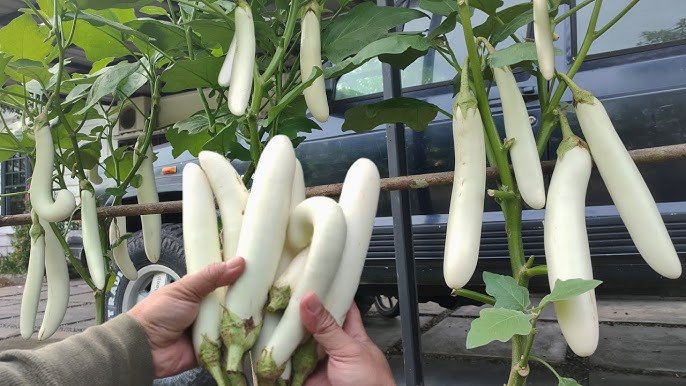
Growing white eggplant in bottles offers several advantages, especially for urban or beginner gardeners:
- Space-Efficient: Perfect for balconies, terraces, or small patios.
- Multiple Harvests: Bottle gardening can produce fruit continuously throughout the season.
- Pest Control: Elevated containers reduce exposure to soil-borne pests and diseases.
- Water-Efficient: Self-watering options help maintain consistent soil moisture.
- Beginner-Friendly: No prior gardening experience is needed to start.
Plastic bottle gardening allows anyone to enjoy fresh, pesticide-free white eggplants, even without a traditional garden.
Step 1: Choosing the Right White Eggplant Seeds
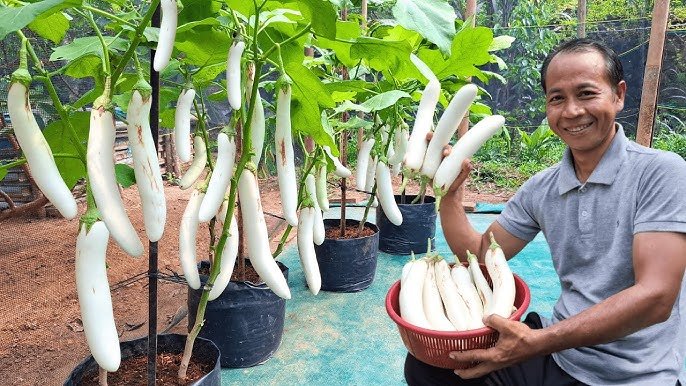
Selecting high-quality seeds is critical for a successful harvest.
- Varieties: Popular white eggplant varieties include White Beauty, White Pearl, and Snowball. For container gardening, compact or dwarf varieties are ideal.
- Seed Quality: Choose fresh, viable seeds with high germination rates to ensure strong seedlings.
- Purpose: Decide if you want smaller tender fruits for cooking or larger eggplants for roasting and grilling.
High-quality seeds set the foundation for healthy plants and abundant fruit production.

Step 2: Preparing Plastic Bottles for Container Gardening
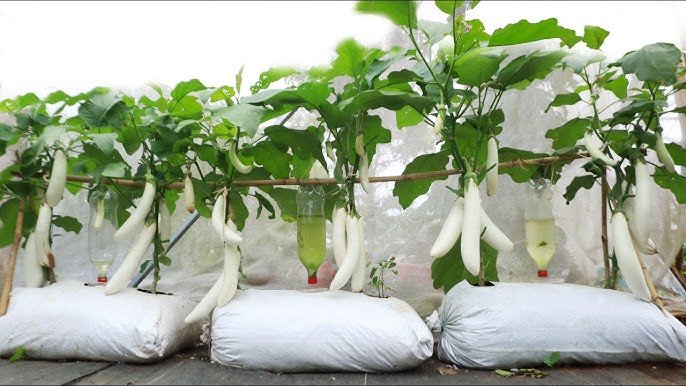
Plastic bottles are perfect for container gardening because they are reusable, lightweight, and easy to modify.
Materials Needed:
- 2–3 liter plastic bottles (cleaned)
- Scissors or craft knife
- Cotton string (optional, for self-watering)
- Soil and compost
Steps to Prepare Bottles:
- Cut the bottle in half. The bottom part will hold soil, while the top part can be inverted as a funnel or lid.
- Poke small holes at the bottom for drainage.
- For self-watering, thread a cotton string through the bottom as a wick, and place the bottle over a water reservoir.
- Fill the bottom half with nutrient-rich soil and compost.
This setup ensures consistent moisture and proper root growth, even in a limited space.
Step 3: Preparing Fertile Soil
White eggplants are heavy feeders, so soil fertility is key.
Recommended soil mix:

- 1 part potting soil
- 1 part compost or organic matter
- 1 part perlite or sand for drainage
Optional Organic Additions:
- Banana peels, coffee grounds, or diluted compost tea for potassium and phosphorus, which boost flowering and fruiting.
A fertile soil mix ensures your plants grow strong, healthy, and capable of producing multiple fruits in bottles.
Step 4: Sowing White Eggplant Seeds
Starting eggplants from seeds in bottles is simple:
- Fill the bottle with soil and make small holes about 1/4 inch deep.
- Place 2–3 seeds in each hole.
- Cover lightly with soil and water gently.
- Place the bottles in a warm, sunny spot (70–85°F) for germination.
Seeds typically sprout in 7–14 days. Once seedlings appear, thin to one strong plant per bottle to focus energy on fruit production.
Step 5: Sunlight Requirements
White eggplants need plenty of sunlight for healthy growth, flowering, and fruiting:
- Sunlight: 6–8 hours of direct sunlight daily.
- Indoor Growth: Use a grow light if natural sunlight is insufficient.
- Rotate Containers: Turn bottles occasionally for even light exposure.
Proper sunlight ensures strong stems, vibrant leaves, and maximum fruit yield.

Step 6: Watering Your Plants
Consistent watering is crucial for container-grown eggplants:
- Water when the top 1–2 inches of soil feel dry.
- Ensure proper drainage to prevent root rot.
- Mulch with straw or coconut husk to retain moisture.
- For self-watering bottles, refill the reservoir every 3–5 days.
Adequate moisture supports healthy roots and continuous fruiting throughout the growing season.
Step 7: Fertilizing for Maximum Fruit Production
Even fertile soil may require additional feeding for optimal yields:
- Early Growth: Use a balanced liquid fertilizer every 2–3 weeks for strong stems and leaves.
- Flowering & Fruiting: Switch to fertilizers high in potassium and phosphorus to encourage flowers and fruits.
- Organic alternatives: Compost tea, diluted cow manure, or banana peel mulch.
Avoid excessive nitrogen, which promotes leaf growth but may limit fruit production.
Step 8: Supporting White Eggplant Plants
White eggplants can grow tall and heavy with fruit:
- Use bamboo stakes, sticks, or small trellises to support the main stem.
- Tie branches gently with soft cloth or garden ties to prevent bending or breaking.
- Prune side shoots if necessary to focus energy on fruit development.
Proper support prevents damage and ensures plants remain productive throughout the season.

Step 9: Flowering and Pollination
White eggplants produce pale violet or white flowers that turn into fruits after pollination:
- Outdoor plants are typically pollinated by bees and insects.
- Indoor or balcony-grown plants may need hand pollination using a soft brush or by gently shaking flowers.
- Adequate sunlight and nutrients encourage frequent flowering, leading to multiple harvests.
Pollination is essential to ensure healthy, well-formed fruits in containers.
Step 10: Harvesting White Eggplants
White eggplants are ready to harvest when they reach the desired size, usually 6–10 inches, depending on the variety:
- Use a sharp knife or scissors to cut the fruit without damaging the stem.
- Harvest regularly to encourage continuous flowering and fruiting.
- Avoid leaving fruits too long on the plant, as this can reduce quality.
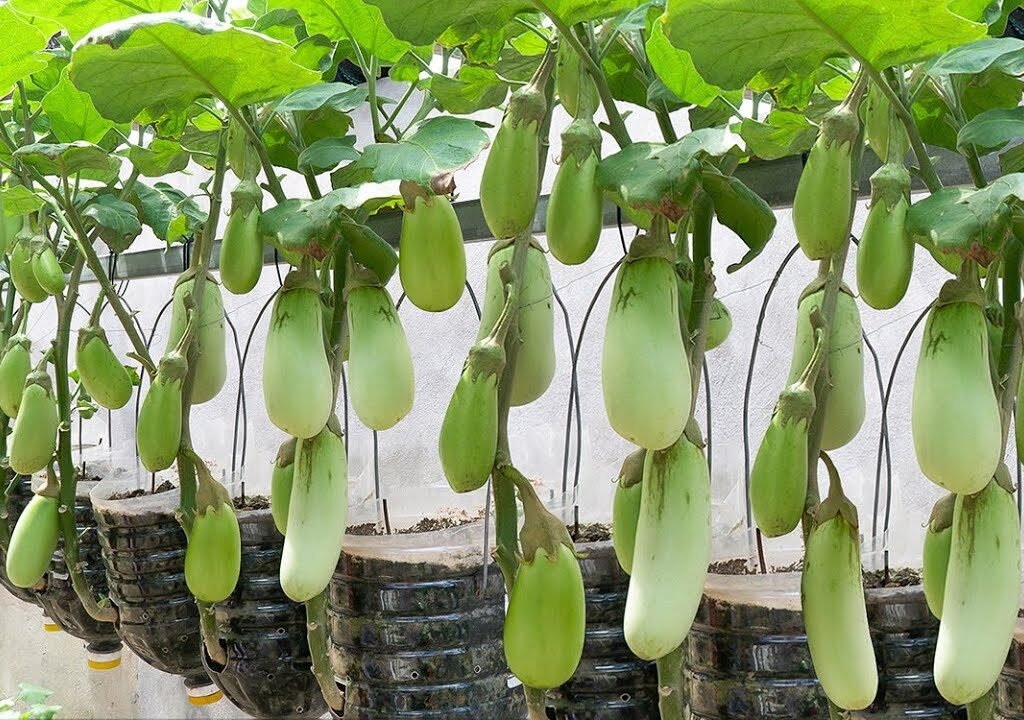
Regular harvesting allows multiple yields from the same plant, making bottle gardening highly productive.
Step 11: Troubleshooting Common Issues
Even in container setups, challenges may arise:
- Yellow Leaves: Usually due to overwatering, nutrient deficiency, or pests. Adjust care accordingly.
- Slow Growth: May result from insufficient sunlight or crowded roots. Thin seedlings and ensure proper light.
- Pests: Aphids, whiteflies, or caterpillars may appear. Use natural remedies like neem oil or mild soap water.
Frequent monitoring ensures healthy plants and maximum harvests.

Step 12: Benefits of Growing White Eggplant in Bottles
- Fresh and Organic: Enjoy pesticide-free, homegrown fruits.
- Space-Efficient: Ideal for urban gardeners with limited space.
- Water-Saving: Self-watering bottles reduce water usage while keeping soil hydrated.
- Multiple Harvests: Produces fruit continuously throughout the season.
- Beginner-Friendly: Easy setup, low maintenance, and high yield.
Plastic bottle gardening allows you to grow your own white eggplants efficiently, even in small spaces.
Conclusion
Growing white eggplants in plastic bottles is a practical, beginner-friendly, and space-saving method for urban gardening. From sowing seeds and preparing nutrient-rich soil to watering, supporting plants, and harvesting multiple fruits, anyone can cultivate healthy, productive eggplants at home.
With proper sunlight, fertilization, and consistent care, you can enjoy fresh, homegrown white eggplants multiple times per season, all from a small balcony, terrace, or windowsill. Start your bottle garden today and experience the joy of growing your own white eggplants with abundant harvests!

Leave A Comment